How to Read Construction Plans and Drawings
How to Read Blueprints: Consummate Guide
Jul 15, 2020

Construction blueprints are technical drawings created by architects, engineers, and designers to put all the structure specifics of a firm in one package to which the builder can refer as they construct the business firm. Although a package of blueprints can exist daunting, as many every bit 50 pages long, the concept of the design is simple: Information technology is a series of two-dimensional representations of a three-dimensional building.
Professional person architect and craftsman Jordan Smith explains in his class on reading blueprints :
"A blueprint is the fundamental plan for the structure of whatsoever construction. The print is what shows the builders, the electricians, the framers – all of the trades people exactly what needs done on any construction projection."
The main sections of a blueprint are:
- Title Sheets and Site Plans
- Flooring Plans
- Elevations and Sections
- Details and Schedules
- Structural Drawings
- Mechanical, Electrical, and Plumbing (MEP) Drawings
Each of these sections uses symbols, scale, and abbreviation to simplify reading the many elements that each programme contains. When you are able to read a blueprint all the fashion through, you volition go a comprehensive agreement of its dimensions, building materials, installation methods, and the mechanical inner workings of the firm, such as electrical and plumbing.
Blueprints likewise comprise details such as quality specifications, building codes, the information necessary for obtaining building permits, and fifty-fifty the schedule for accomplishing all aspects of the building.
The ability to read and understand blueprints in an essential skill for those working in the building trades. Larn everything you need to know about reading blueprints in MT Copeland's online course , taught by professional architect and craftsman Jordan Smith.
What kinds of drawings does a set of blueprints include?
There are many types of drawings that are used during the building procedure: architectural, structural, and mechanical. Some are used at specific stages, and others may evolve over time. These are the types of plans that should be included in a set of blueprints:
Architectural drawings
Architectural drawings will reverberate the overall appearance—internal and external—of the habitation, how it is oriented on a building site, and the layout of its living areas

Site program
The site program functions as a readable map of a building site, giving yous the details you demand to know well-nigh how the structure volition be oriented on the lot. An builder or general contractor volition create a diagram that shows the plot of land and its property lines, along with its mural features, structural elements, setbacks, driveways, utility poles and power lines, fencing, and on-site structures.
Floor plans
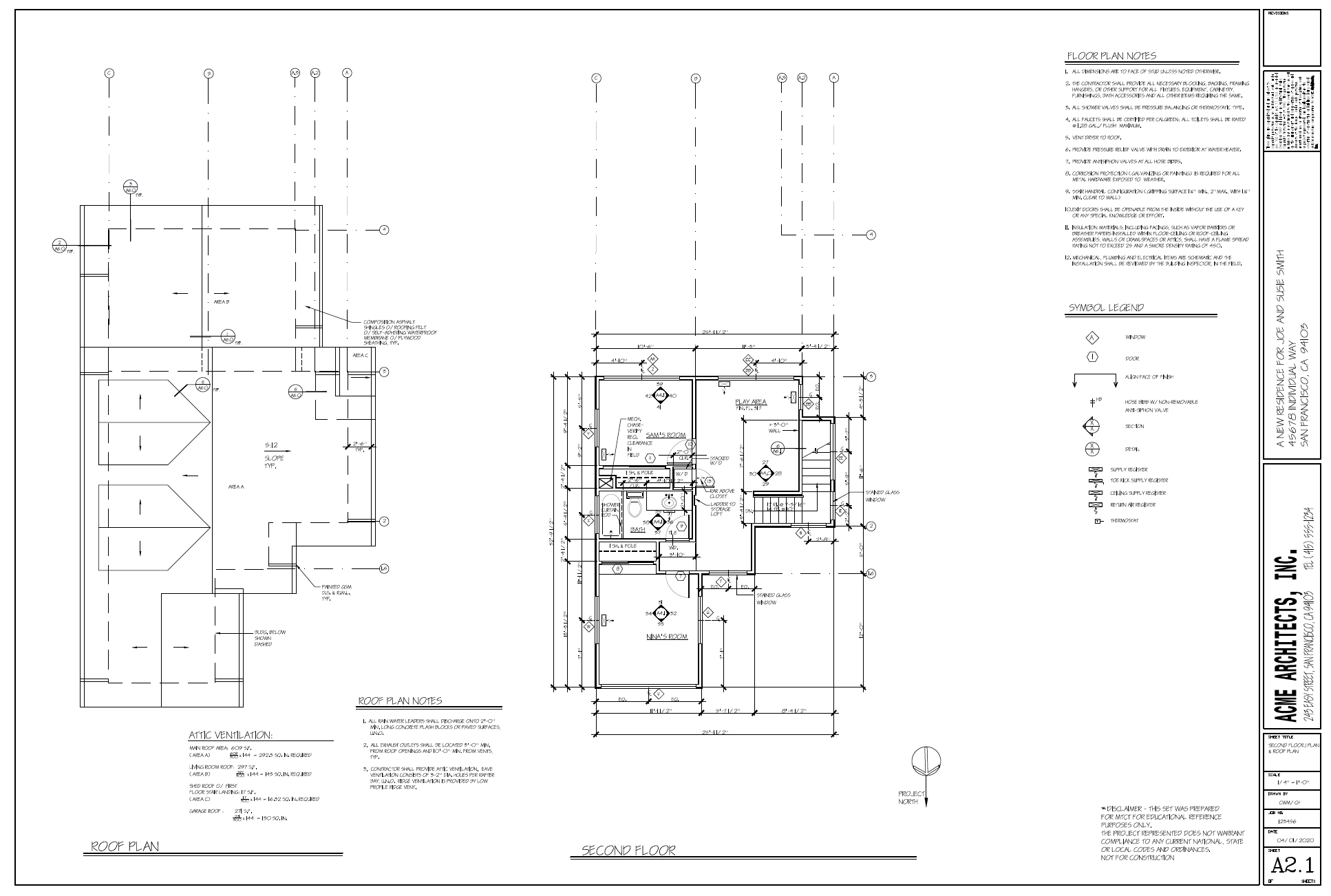
Imagine a view of a domicile sliced horizontally about five feet from the footing and looking down from above. This is the mode a flooring programme is fatigued, and it is designed to give you a detailed thought of the layout of each floor of the business firm. It includes features such as walls, doors, windows, and even furniture.
Reflected ceiling plan (RCP)
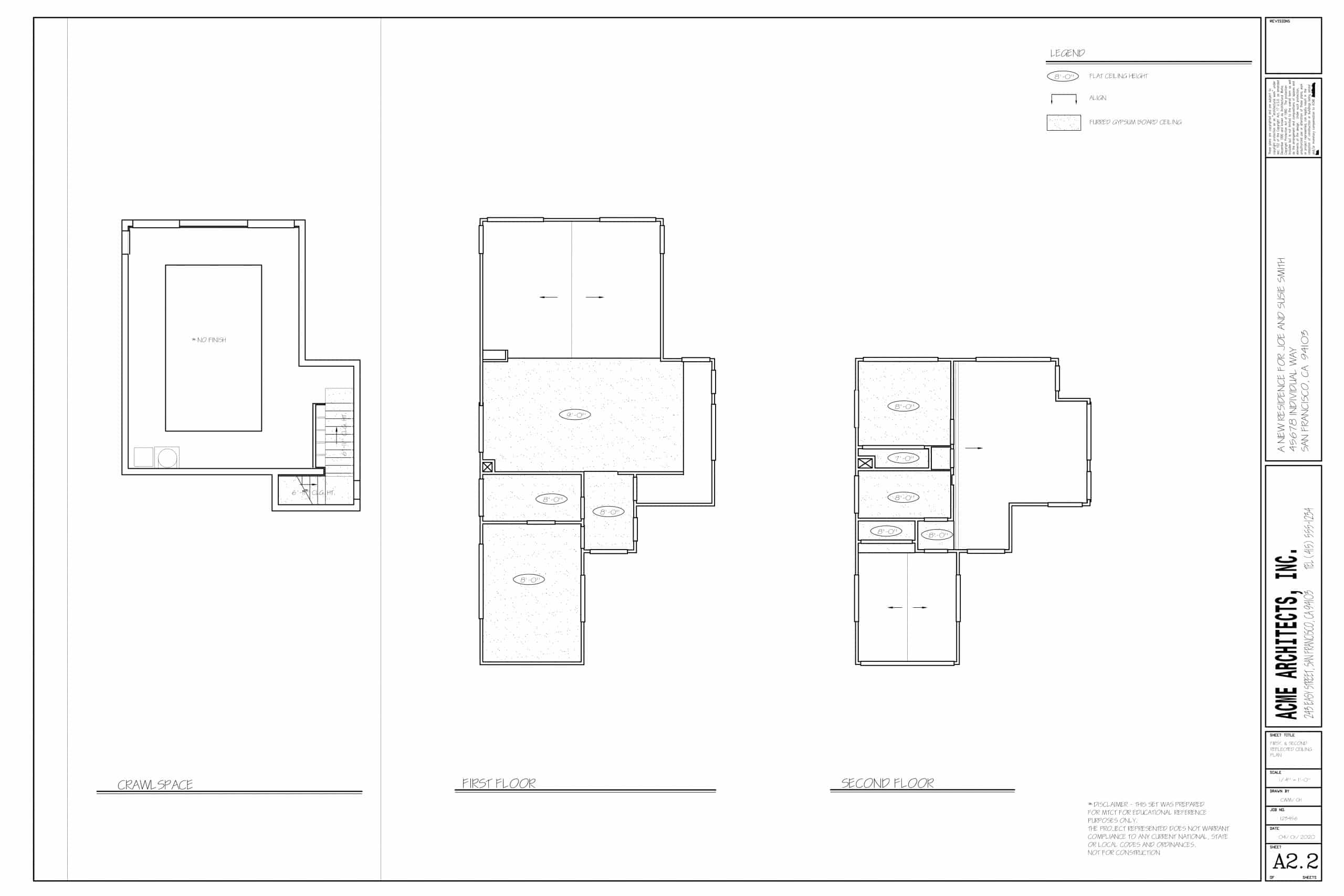
The RCP is a print that shows you the dimensions, materials, and other key information about the ceiling of each of the rooms represented on your blueprint. It takes its name from the thought that you lot are looking down at the ceiling as though there were a mirror on the flooring reflecting the ceiling's program back to you. (Notation that this type of cartoon isn't ever included in the blueprints parcel.)
Detail drawings
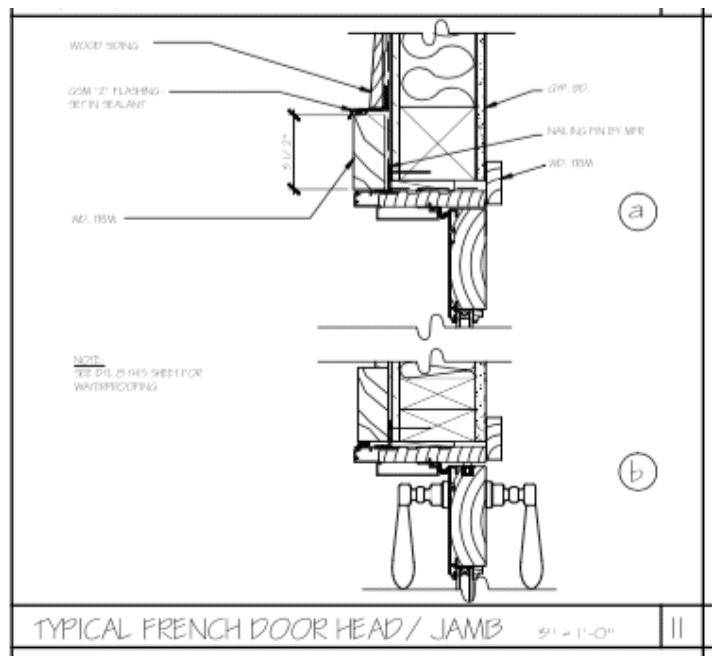
Special details of a firm are included in drawings whose features are magnified so that a architect can come across how to construct these elements. Structural connections, window openings, and wall junctions can all exist included in supplemental detail drawings.
Elevations and sections
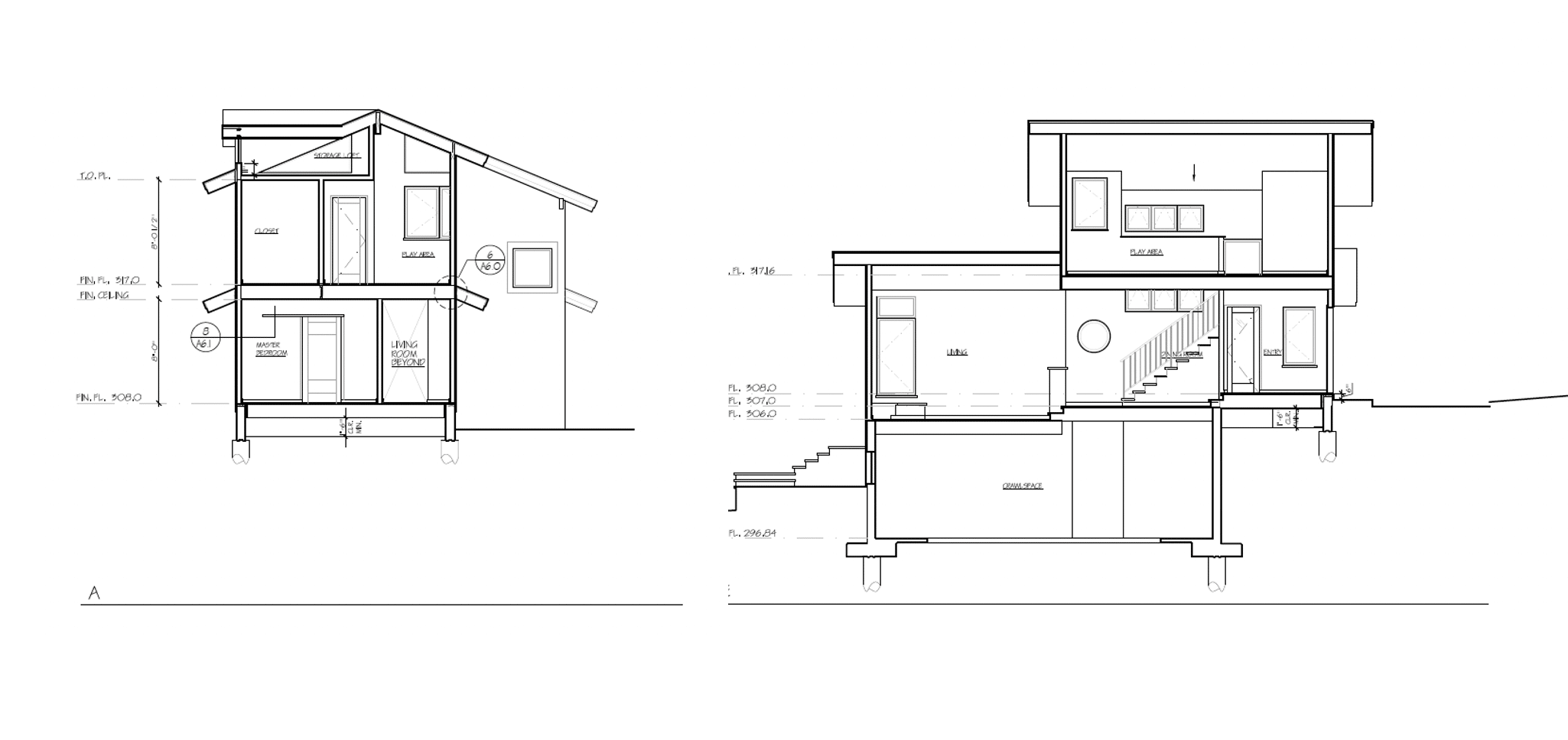
Elevations show the vertical layout of the edifice, and there is ordinarily one meridian cartoon for each face of the building. An exterior elevation shows you what a house like if y'all're standing front, adjacent to, or behind it. An interior meridian shows the aforementioned thing, only from inside the firm. Section drawings evidence what the building would await if you were to make a vertical cut through a particular role of a building to bear witness a cross section of the structure, and how the spaces inside fit together vertically.
Structural drawings
One time the architectural drawings are complete, the builder sends those prints to an engineer, who uses them to create the structural prints. The structural drawings bear witness how the house will be framed, and how the building will be given its structure. They are shown from the footing up; in other words; you'll meet a structural drawing for each flooring of the firm. As Jordan Smith puts it:
"The architectural prints show how the building is supposed to wait, how it's supposed to interact with the humans that are living in information technology… Nonetheless, it doesn't requite you any data on how to build it in such a way that it doesn't fall downwardly. The structural prints become into all of that particular."
The structural prints are sent dorsum to the builder for review, and the team signs off on them before they're included in the package and sent to the builder.

MEP (Mechanical, Electrical, Plumbing)
Remember of MEP as the primal nervous system of a building, since every mechanical function that occurs in a building, from ensuring its air quality to planning its electronic and communications systems, to laying out circuitous pipage routes, is performed by an MEP engineer. The MEP systems are usually delivered in a bundle equally dissever drawings. As a architect, it's of import to know where those systems will be routed, so you can leave space for them to be laid in.
Mechanical
The mechanical plans show the heating, ventilation, and air workout (or HVAC) systems of a building. These are all elements you will find in mechanical drawings.
- HVAC systems
- Exhaust systems
- Direct digital control (DDC) systems
- Chilled water systems
- Heating water systems
- Infection control HVAC
Electrical
The electrical plans evidence how the electrical system volition provide the power supply for lights and appliances. Electric engineers design the best routes for wiring and design systems that tin exist safely and continuously operated. Some of the components of electrical plans include:
- Onsite power generation requirements and distribution
- Information technology (IT) and audiovisual (AV) plans
- Lighting and fire protection systems
- Standby power systems
Plumbing
Plumbing designs reflect the complex piping and sewage routes for the building, besides as heated water and rainwater collection and storage. More and more than, plumbing designers are called to develop efficient systems that tin can help decrease a building's water consumption and reduce h2o bills. For instance, they plan low-flow fixtures in bathrooms, insulate piping and utilise alternative water sources. Some of the plumbing systems in MEP drawings include:
- Natural gas pipe
- Domestic warm and common cold h2o
- Acrid waste pipe
- Storm drainage systems
- Vacuum/compressed air
How to read blueprints
Starting time, understand that the entire packet of drawings includes separate aspects of the structure that together reflect all the structure elements of the house. In order to get a complete picture of a house, start reading construction plans at the beginning, starting with the site plan. The plans requite progressively more structural detail as you accelerate through the package.
Abbreviations and symbols
The number of details that must be included in a consummate gear up of blueprints is so large that architects reduce the information on the drawings to a set of standardized symbols and abbreviations in society to make the drawing easier to read and less chaotic.
For reference, every set of architectural drawings includes a symbol legend. If yous aren't familiar with a symbol, you will be able to find information technology in the legend. Floor plan notes give additional context for the building. For instance, the notes can clarify exactly to what bespeak on a wall dimensions should be measured.
Every symbol on the fable is drawn to the same calibration as the rest of the flooring plan. Most plans include symbols that are a combination of appearance (for instance, a bath looks like a bath); conventions (double lines are commonly used to announce walls); and labels (for example, a thermostat is labeled "T").
Scale
In order to fit all the information about a layer of a building onto a page, construction drawings and architectural drawings are drawn and so that a minor increment of measurement represents a larger increment. This means that the plans are drawn "to calibration."
Scales vary in complexity, from the simple (1 inch = 1 foot) to the complex (3/16 inch = one foot). The symbols are also drawn to scale so you will get an accurate thought of how elements of a room are configured in the space.
The scale is always shown on the same folio as the cartoon, either under the championship or below an individual cartoon. Keep in heed that scales tin can vary throughout a set of architectural prints, so check each page and use an architectural scale , or scaled ruler, to make certain you're reading the print accurately. If you lot don't own one already, information technology'due south an essential tool of the merchandise for architects, engineers, and builders that you will want to buy now. Y'all can besides download a elementary printable version from Archtoolbox .
3 perspectives: program, meridian, and sections
A floorplan is the building programme that is most familiar to most people: a bird'south-centre view of a building with all the elements laid out on a horizontal aeroplane. But in order to understand the construction in three dimensions, you'll need to be able to read the plan, elevation, and sections together. For instance, while an elevation drawing volition show what a house looks like if you lot're continuing adjacent to its exterior or interior walls, the section view provides vital insight into how the construction will stand up.
While elevations and sections are both vertical representations of a design concept, the section view reveals details of the structure of walls and the thickness and height of beams and other back up. Working all together, these iii types of drawings will give you the full moving-picture show of the structure of the house.
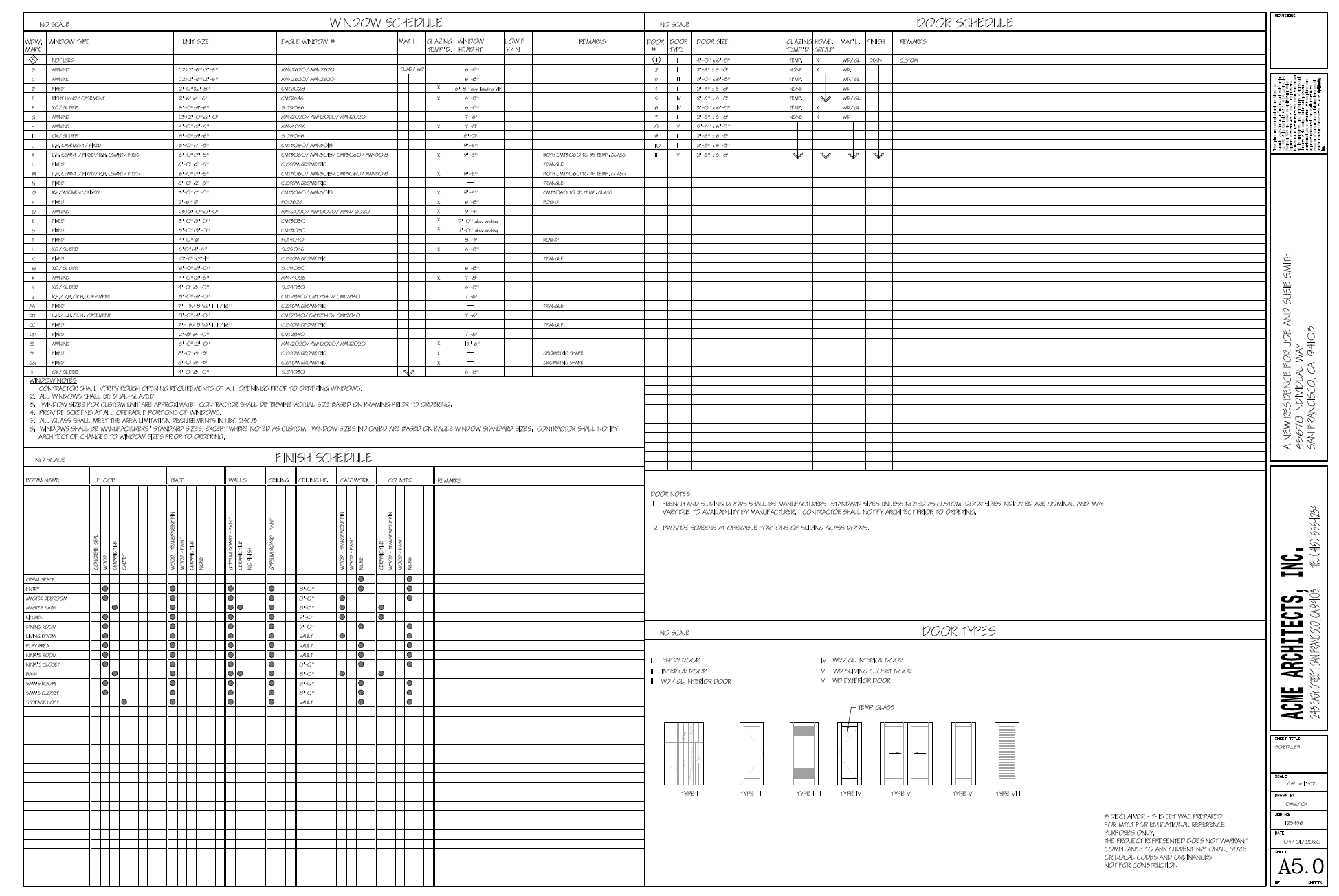
Schedules
These documents show a list of materials and products necessary for the structure, and the guild of installation. Typical schedules include doors and windows and room terminate schedules.
What is the human relationship between blueprints and structure planning?
Information technology's important to empathize who's involved with the blueprints as the construction planning happens. In full general, an architect will transport the architectural drawings to an engineer, who plans the structural prints to work with the architectural plans. The structural prints are sent back to the builder to review. All parties should sign off before they are sent to the architect to execute.
MT Copeland offers video-based online classes that give y'all a foundation in structure fundamentals with real-globe applications. Classes include professionally produced videos taught by practicing craftspeople, and supplementary downloads similar quizzes, blueprints, and other materials to help you master the skills.
Source: https://mtcopeland.com/blog/how-to-read-blueprints-complete-guide/
0 Response to "How to Read Construction Plans and Drawings"
Post a Comment